
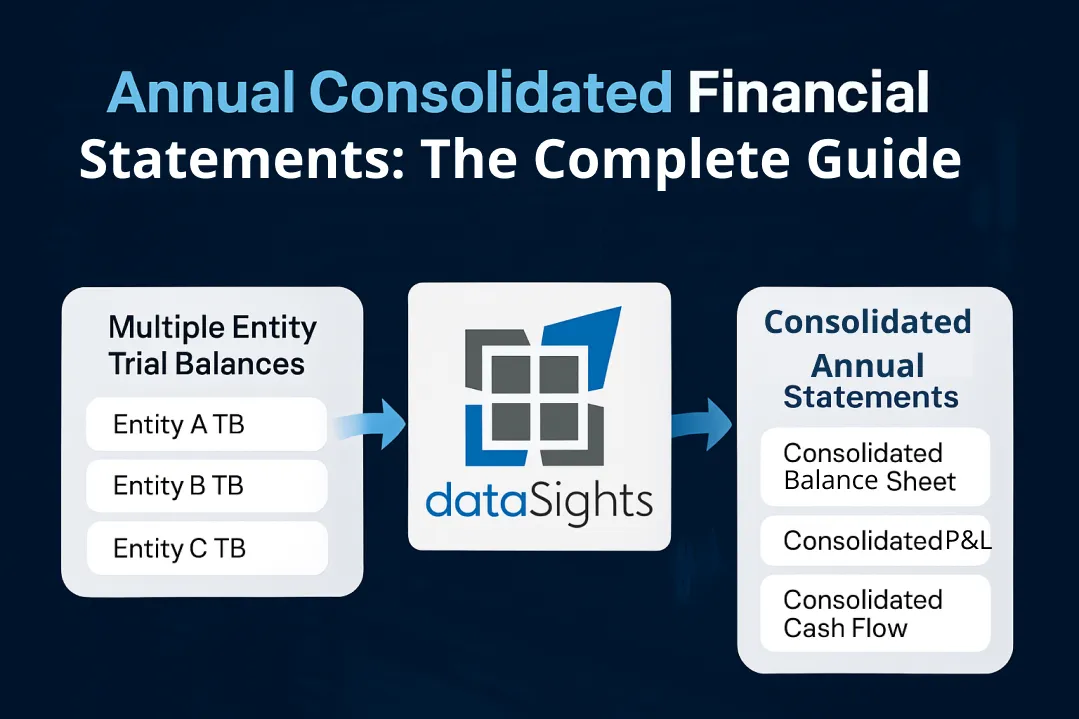
You’re managing multiple entities, and month-end consolidation feels like piecing together a jigsaw puzzle in the dark. Parent company books show one story, subsidiaries another, and intercompany transactions create a reconciliation nightmare. Annual consolidated financial statements demand precision – balance sheets must reconcile, eliminations must clear, and audit trails need to withstand regulatory scrutiny. One misplaced entry, one forgotten elimination, and your entire group picture falls apart.
Understanding Annual Consolidated Financial Statements
Annual consolidated financial statements combine the financial results of a parent company and all controlled subsidiaries into a single set of reports, presenting the entire group as one economic entity. These statements include consolidated balance sheets, income statements, cash flow statements, and equity statements, with all intercompany transactions eliminated to prevent double-counting. Under IFRS 10, parent companies that control one or more entities must prepare annual consolidated financial statements. Filing deadlines vary by jurisdiction – often three to four months for listed entities, with private group timelines set by local regulators or lender covenants.
Ready to Automate Your Financial Consolidation?
Stop wrestling with manual consolidations and broken formulas. dataSights automates multi-entity reporting, Xero consolidations, and Power BI connections. Join 300+ businesses already transforming their financial reporting with our platform, rated 5.0 out of 5 by 90+ verified Xero users.
Table of Contents
What Are Annual Consolidated Financial Statements?
Annual consolidated financial statements are group-level accounts that show the combined assets, liabilities, equity, income, expenses and cash flows of a parent and its subsidiaries. Instead of reading multiple standalone entity reports, stakeholders see one set of numbers that reflects the group’s overall performance and financial position. Intercompany sales, loans, dividends and balances are removed on consolidation so that only transactions with external parties remain.
Under IFRS 10, a parent must consolidate any entity it controls, even if it owns less than 50% of the voting shares. Control is based on power over relevant activities, exposure to variable returns and the ability to use that power to affect those returns. In practice, that means management has to look beyond simple ownership percentages and assess contractual rights, de facto control and structured arrangements when deciding which entities belong in the annual consolidated financial statements.
Watch how dataSights handles multi-entity Xero consolidation with automated eliminations and real-time Trial Balance reconciliation:
Who Needs to Prepare Annual Consolidated Financial Statements?
Control determines consolidation requirements, not just ownership percentages. If your parent company directs the relevant activities of another entity, controls variable returns, and uses that power to affect outcomes, consolidation becomes mandatory.
Typical control indicators include:
- Owning more than 50% of voting shares
- Appointing the majority of the board, or
- Holding substantive rights via contracts (for example, decision-making rights over relevant activities, kick-out rights, or unilateral ability to direct operations)
Public companies and larger private groups that control one or more subsidiaries are generally required to prepare consolidated financial statements under IFRS 10 or local GAAP. Control – not just ownership percentage – drives whether group accounts are needed.
Exemptions and Exceptions
Investment entities receive specific exemptions under IFRS 10. These organisations measure controlled subsidiaries at fair value through profit or loss rather than consolidating line-by-line. Intermediate parent companies may also qualify for exemptions if their ultimate parent prepares publicly available consolidated statements.
Small groups below certain thresholds can avoid consolidated reporting in some jurisdictions. For the UK, for example, the Companies Act 2006 provides a small-group exemption from preparing group accounts. Check the latest Companies House or professional guidance for up-to-date turnover, asset and headcount thresholds, and see our consolidated financial statements guide for a practical summary.
Key Components of Annual Consolidated Financial Statements
Four core statements make up your annual consolidated package. Each component serves a distinct purpose, combining data from all entities while eliminating internal transactions to show genuine group performance.
Consolidated Balance Sheet
The consolidated balance sheet presents the financial position of the entire group at year-end. Assets and liabilities from each subsidiary are aggregated, while intercompany balances such as receivables, payables, and internal loans are eliminated so only external positions remain.
Non-controlling interests appear as a separate equity line when you own less than 100% of subsidiaries. If you hold 80% of Entity A, the remaining 20% belongs to external shareholders – their portion shows distinctly in equity.
Consolidated Income Statement
Revenue and expenses aggregate across all entities, with intercompany sales removed. If your parent invoices a subsidiary £500,000 for services, consolidation eliminates both the revenue and expense to reflect only external transactions.
Profit attribution splits between parent shareholders and non-controlling interests. The subsidiary’s net income after eliminations is divided based on ownership percentages.
Consolidated Cash Flow Statement
Cash flows are grouped into operating, investing and financing activities for the entire group. Internal cash flows – such as intercompany loans, repayments and internal dividends – are eliminated to show only external cash movements.
Consolidated Statement of Changes in Equity
This statement explains movements in group equity, including:
- total comprehensive income,
- dividends paid,
- foreign currency translation reserve movements, and
- equity effects of acquiring or disposing of subsidiaries.
Notes to the Consolidated Financial Statements
The notes provide essential disclosures that explain accounting policies, consolidation judgments, segment information, related-party transactions, and risks. IFRS 12 requires detailed disclosure on interests in subsidiaries, associates and joint ventures.
Foreign Currency Translation (IAS 21)
Foreign subsidiaries operating in another currency must be translated into the group’s presentation currency.
- Assets and liabilities → closing rate
- Income and expenses → average rate (if it approximates actual)
- Translation differences → recorded in Other Comprehensive Income (OCI)
How to Prepare Annual Consolidated Financial Statements
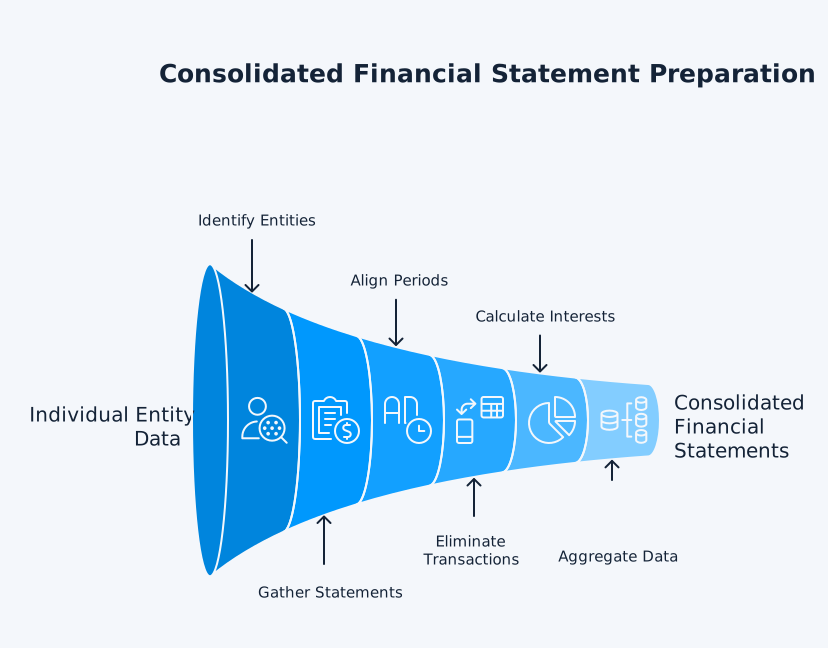
Consolidation follows a systematic seven-step process. Each stage builds on the previous one, transforming individual entity data into unified group statements. Miss one step, and your entire consolidation fails to balance.
Step 1: Identify All Reporting Entities
List every subsidiary where you exercise control. Control extends beyond majority ownership – contractual arrangements or significant operational influence can establish control even with less than 50% shareholding.
Document each entity’s reporting currency, fiscal year-end, and accounting policies. Misaligned year-ends require adjustment, though IFRS permits up to three months’ difference with appropriate interim event disclosures.
Step 2: Gather Financial Statements from Each Entity
Collect trial balances, general ledgers and supporting documentation from all entities. Ensure consistent accounting policies across the group – subsidiaries must align their revenue recognition, depreciation methods and inventory valuation with parent company policies.
Step 3: Align Reporting Periods and Currencies
Subsidiaries with different fiscal year-ends need adjusted financials. If your parent closes December 31 but a subsidiary ends September 30, prepare interim statements through December or adjust for material transactions in the gap period.
Foreign currency translation requires specific treatment under IAS 21. Assets and liabilities convert at closing rates, income and expenses at average rates, with translation differences flowing through other comprehensive income.
Step 4: Eliminate Intercompany Transactions
Identify and cancel all intra-group activity. Common eliminations include:
- Intercompany sales and purchases: Remove both sides of internal transactions to prevent revenue inflation.
- Intercompany loans: Eliminate receivables and payables between group entities.
- Unrealised profits: Adjust for profit margins on inventory or assets still held within the group.
- Dividends: Cancel dividends paid from subsidiaries to the parent, as these represent internal capital movements.
Step 5: Calculate Non-Controlling Interests
Determine external shareholders’ portion of subsidiary net assets and profit. If you own 70% of a subsidiary with £1 million equity, non-controlling interest equals £300,000 (30% × £1 million). Note: This simplified calculation illustrates the concept. In practice, NCI measurement involves fair value adjustments at acquisition date, the choice between fair value and proportionate share methods under IFRS 3, and allocation of post-acquisition profits.
Attribute subsidiary profit between parent and non-controlling interests after eliminations. This ensures profit allocation reflects actual ownership percentages.
Step 6: Aggregate Financial Data
Combine all uncancelled items across entities. Assets, liabilities, revenues, expenses and cash flows from each subsidiary add to the parent company figures, creating consolidated totals.
Step 7: Prepare Notes and Disclosures
Document consolidation basis, accounting policies, entity details and significant judgements. Disclose non-controlling interest calculations, intercompany elimination details and any restrictions on subsidiary assets.
IFRS 10 vs GAAP Requirements for Annual Consolidated Financial Statements
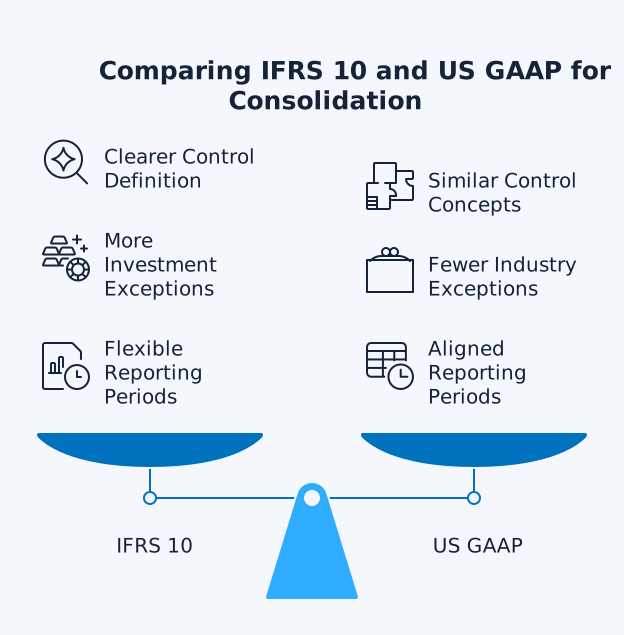
Both IFRS 10 and US GAAP base consolidation on control rather than rigid ownership thresholds. The frameworks share similar principles but differ in specific applications.
Control Assessment
IFRS 10 defines control through power over relevant activities, exposure to variable returns and ability to affect those returns. US GAAP applies similar concepts through ASC 810, evaluating voting interests and variable interest entities.
Investment Entity Exceptions
IFRS provides clearer guidance on investment entity exemptions, allowing certain entities to measure subsidiaries at fair value rather than consolidating. US GAAP offers fewer industry-specific exceptions.
Reporting Periods
IFRS permits more flexibility with different reporting dates between parent and subsidiaries, accepting up to three months’ difference with appropriate adjustments. US GAAP traditionally expects aligned reporting periods.
Common Challenges in Preparing Annual Consolidated Financial Statements
Even experienced finance teams encounter recurring obstacles during consolidation. Intercompany eliminations create reconciliation headaches, multiple currencies introduce translation complexity, and manual processes compound errors. Here’s how to handle the most frequent issues.
Intercompany Elimination Complexity
Manual elimination tracking creates reconciliation nightmares for groups with dozens of entities. Each intercompany transaction requires documentation, and missing even one creates imbalances that surface during audit.
Automated solutions maintain permanent elimination rules in central databases, applying them consistently across reporting periods. This approach reduces month-end close from over 15 days to under 5.
Multiple Currency Consolidation
Groups operating across currencies face translation complexity. Functional currency versus presentation currency distinctions under IAS 21 require careful handling, with exchange rate fluctuations affecting consolidated equity.
Different Accounting Policies
Subsidiaries using variant policies need alignment adjustments before consolidation. If one entity uses FIFO inventory valuation while another uses weighted average, you must standardise methodology across the group.
Trial Balance Foundation
All consolidations must tie back to entity-level Trial Balances. Without this foundation, consolidated statements lack the reconciliation integrity that auditors demand. Automated consolidation platforms pull full Trial Balance data from each entity, ensuring every consolidated figure traces to source systems.
Automating Annual Consolidated Financial Statements
Manual consolidation using spreadsheets introduces human error, lacks audit trails and consumes excessive time. For finance teams who live in Excel, dataSights also automates consolidated data directly into spreadsheets using our OfficeAddIn and Power Query workflows. Month-end packs, custom schedules and board-ready models update from the same SQL database, so teams focus on analysis rather than exporting and manipulating CSVs.
Database-Driven Consolidation
SQL database architecture enables proper financial consolidation. Data from multiple entities flows into central databases where elimination rules apply automatically. Every adjustment maintains timestamps, user identification and complete audit trails – the foundation external auditors require.
Management Reports Beyond Compliance
Consolidated statements serve compliance requirements, but finance teams need management intelligence. Pre-formatted management packs deliver consolidated P&L, Balance Sheets and KPI dashboards without additional manual work.
dataSights automates multi-entity consolidation by syncing data from all your Xero organisations into dedicated SQL databases. Elimination entries apply automatically, Trial Balances reconcile continuously, and Power BI dashboards update on your configured refresh schedule – delivering near real-time visibility without manual intervention. Your annual consolidated statements start from clean, pre-validated data rather than month-end scrambling.
Frequently Asked Questions
When Are Annual Consolidated Financial Statements Due?
Filing deadlines vary by jurisdiction and regulator. Listed entities often face three to four-month deadlines under securities regulations. Private groups should verify requirements with their local regulator, Companies House, or lender covenants.
What's the Difference Between Consolidated and Combined Financial Statements?
Consolidated statements eliminate intercompany transactions and present a single economic entity. Combined statements show entities side-by-side without eliminations, useful when entities share common ownership but lack parent-subsidiary relationships.
Can Small Businesses Skip Consolidated Statements?
Small groups below turnover and asset thresholds may qualify for exemptions in some jurisdictions. However, many prepare consolidated statements voluntarily for lender requirements, investor transparency or internal management visibility.
How Long Does Consolidation Take?
Manual consolidation for groups with 30+ entities can extend beyond two weeks. Automated platforms reduce this to days by handling elimination entries, currency conversions and Trial Balance reconciliations systematically.
What Happens If Subsidiaries Use Different Reporting Periods?
IFRS permits up to three months’ difference between parent and subsidiary year-ends. Material transactions occurring in the gap period require adjustment or disclosure. Ideally, align all entities to common reporting dates.
Do I Need to Consolidate Joint Ventures?
Control determines consolidation. Joint ventures where you share joint control are typically accounted for using the equity method under IAS 28 – you recognise a single-line investment in your balance sheet plus your share of profit or loss (and OCI movements). Full consolidation applies only if you have control. For joint operations under IFRS 11, you recognise your share of assets and liabilities directly.
How Do I Handle Non-Controlling Interests?
Non-controlling interests represent external shareholders’ ownership in subsidiaries. Present their equity portion separately in consolidated balance sheets and attribute subsidiary profit between parent and non-controlling interests based on ownership percentages. Note: NCI calculations in practice also consider fair value adjustments at acquisition, your chosen measurement method under IFRS 3, and post-acquisition profit allocation.
Are Audits Required for Consolidated Statements?
Public companies face mandatory audit requirements. Private groups may choose audits voluntarily or face lender-imposed requirements. Even without formal audits, maintain robust audit trails for internal controls and potential regulatory reviews.
Transform Manual Consolidation into Automated Intelligence
Annual consolidated financial statements demand accuracy, audit trails and efficiency that spreadsheets cannot deliver. Your finance team shouldn’t spend weeks eliminating intercompany transactions when automation can handle them systematically.
Automate Your Xero Consolidation Reporting Today
Ready to consolidate multiple Xero entities in minutes instead of weeks? dataSights delivers automated Trial Balance consolidation, elimination entries, and complete audit trails, along with pre-formatted management packs. Rated 5.0 by 90+ Xero users. Join 300+ businesses that have transformed their annual consolidated financial statements.
About the Author
Kevin Wiegand
Founder & Client happiness
I’m Kevin Wiegand, and with over 25 years of experience in software development and financial data automation, I’ve honed my skills and knowledge in building enterprise-grade solutions for complex consolidation and reporting challenges. My journey includes developing custom solutions for data teams at Gazprom Marketing & Trading and E.ON, before founding dataSights in 2016. Today, dataSights helps over 300 businesses achieve 100% report automation. I’m passionate about sharing my expertise to help CFOs and Financial Controllers reduce their month-end close time and eliminate the manual Excel exports that drain their teams’ valuable time.