
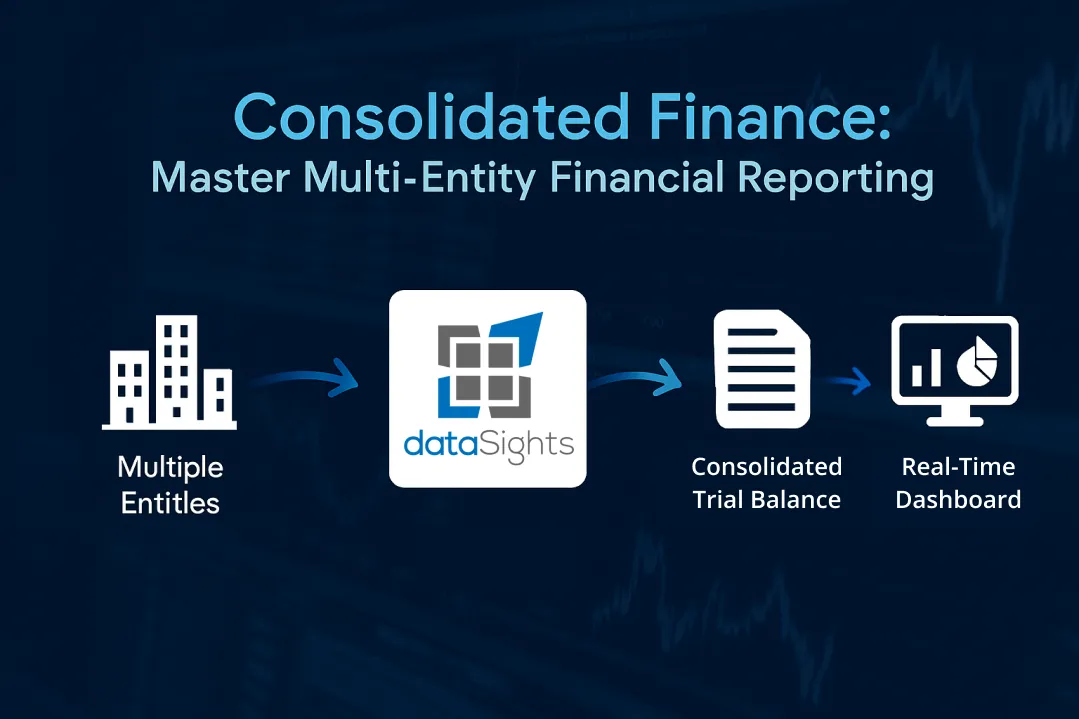
Managing financial data across multiple entities is hard. Different currencies, policies, and deadlines make group reporting fragile. The complexity of consolidated finance stretches closes beyond 15 days. Here’s how to streamline the process without sacrificing accuracy.
What Is Consolidated Finance?
Consolidated finance presents a parent and its subsidiaries as one economic entity by combining assets, liabilities, equity, income, expenses, and cash flows, and eliminating intercompany activity. Under IFRS 10, consolidation is required when control exists; for many groups, consolidation adds roughly a working week to close, making accuracy and automation critical.
Ready to Automate Your Financial Consolidation?
Stop wrestling with manual consolidations and broken formulas. dataSights automates multi-entity reporting, Xero consolidations, and Power BI connections. Join 300+ businesses already transforming their financial reporting with our platform, rated 5.0 out of 5 by 90+ verified Xero users.
Table of Contents
Understanding Consolidated Financial Statements
Consolidated financial statements serve as the cornerstone of multi-entity financial reporting, providing stakeholders with a unified view of the entire business group’s performance. These statements aggregate financial data from parent companies and subsidiaries, eliminating redundancies and presenting an accurate economic picture of the organisation.
The Three Core Components
Your consolidated financial statements consist of three essential documents that work together to tell your company’s complete financial story.
- The income statement combines revenues and expenses across all entities, showing whether your group made a profit or incurred a loss during the reporting period.
- The balance sheet provides a snapshot of your consolidated financial position, detailing total assets, liabilities, and shareholders’ equity at a specific point in time.
- The cash flow statement tracks consolidated cash inflows and outflows, revealing your group’s liquidity and ability to generate cash across all operations.
When Consolidation Becomes Mandatory
Under IFRS 10 and ASC 810, consolidation is required when the parent controls the investee (power over relevant activities, exposure to variable returns, and ability to affect those returns). Interests with significant influence (IAS 28/ASC 323) or joint control (IFRS 11) are not consolidated line-by-line; they are typically accounted for using the equity method.
UK Companies Act 2006 provides exemptions for some small groups; AU/NZ subsidiaries may be exempt if consolidated at a higher level. Even when exempt, many Xero groups still prepare management consolidations for boards/investors.
For finance teams and BI developers, managing consolidations and reporting across multiple entities can be complex and time-consuming. dataSights streamlines this process with a solution that achieves the following:
- Combines automated eliminations
- Has customisable reporting
- Direct, automated connections between Xero and your Excel/Power BI reports – no CSV exports or manual uploads
Whether handling a handful of subsidiaries or hundreds of franchises, the platform ensures every consolidation is accurate, balanced, and ready for analysis.
The Critical Role of Trial Balance in Consolidation
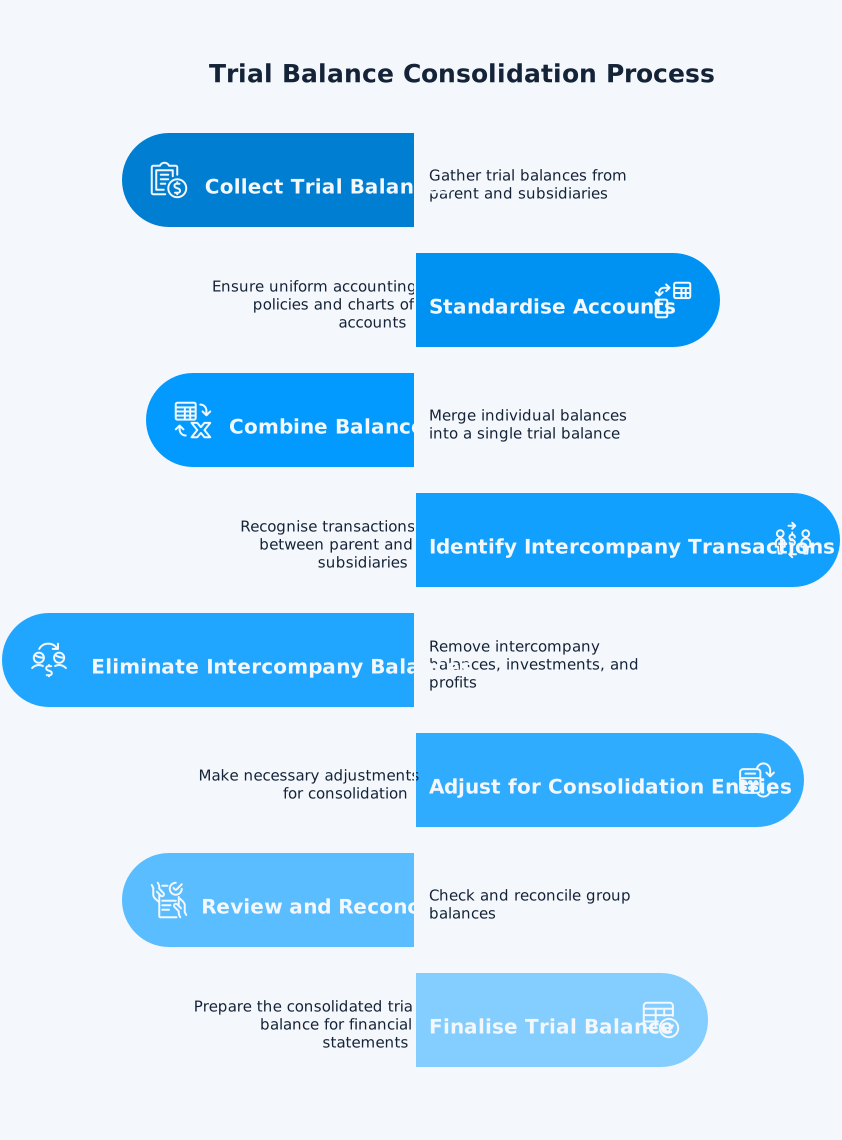
The trial balance serves as the backbone of any successful consolidation, yet many finance teams underestimate its importance. Without a properly balanced trial balance for each entity, your consolidation will never reconcile, resulting in hours of investigation and manual adjustments.
Why Trial Balance Matters Most
Consolidating Trial Balance Reports is considered an essential control tool and is used by Group Controllers to ensure that the financial transactions supplied from subsidiaries are in balance. Before any meaningful consolidation can occur, each entity’s trial balance must be accurate and complete. Think of it as the foundation of a building – if the foundation isn’t level, everything built on top becomes unstable. Your trial balance provides the definitive list of all account balances that will flow into your consolidated statements.
Xero has no native intercompany module. Eliminations and NCI are managed outside Xero – typically in your reporting/consolidation layer. Always reconcile back to each entity’s Trial Balance before eliminations.
Eliminating Intercompany Transactions
Intercompany transactions refer to transactions that occur between entities within the group and must be eliminated to avoid inflating your financial position. These eliminations represent one of the most complex aspects of consolidation.
Common eliminations include:
- Intercompany sales and purchases
- Loans between entities
- Management fees
- Dividend payments.
Having an Investor register that automatically feeds into the consolidation elimination is an advantage and can assist in reconciliation; yet, most companies still handle this manually in spreadsheets, which increases error risk.
The Audit Trail Challenge
Manual consolidation processes leave gaping holes in your audit trail. When auditors ask how you arrived at specific elimination figures or why certain adjustments were made, spreadsheet-based processes offer little documentation. According to BlackLine research, reconciliation involves juxtaposing internal records against external sources to verify accuracy, yet spreadsheets provide no systematic way to track these validations.
Reducing Month-End Close Time Through Consolidation Automation
The difference between a 5-day close and a 15-day close isn’t just about efficiency – it’s about having timely information to make strategic decisions while opportunities are still relevant.
The Hidden Costs of Manual Consolidation
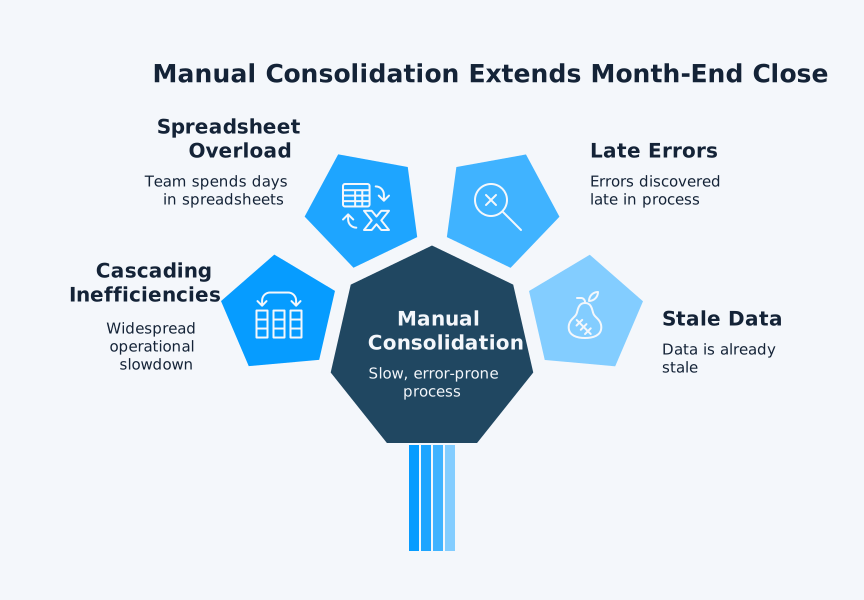
Manual consolidation can stretch the month-end close for multi-entity businesses. Beyond the obvious time cost, manual processes create:
- Cascading inefficiencies.
- Your team spends days in spreadsheets instead of analysing results.
- Errors discovered late in the process require complete re-runs of consolidation.
- By the time reports reach leadership, the data is already stale, and the next close cycle is beginning.
Continuous vs Period-End Consolidation
Traditional consolidation happens once a month-end, turning financial close into a crisis management exercise. Modern continuous consolidation provides daily visibility into your consolidated position, allowing issues to surface immediately rather than two weeks after month-end. Issues surface daily, not two weeks after the month-end when you implement continuous consolidation processes. This shift from reactive to proactive consolidation transforms how finance teams operate.
Time Savings That Transform Your Finance Function
Research shows that automation can reduce close time by up to 70%. But the real transformation goes beyond time savings. Your team shifts from data processing to data analysis. Strategic initiatives get attention throughout the month, not just between close periods. Finance becomes a business partner rather than a reporting function.
Managing Multi-Entity Complexity Without Spreadsheets
Excel served finance teams well for decades, but modern multi-entity structures have outgrown what spreadsheets can reliably handle.
When Spreadsheets Break Down
The risk of error, the chance of duplicated work, and drawn-out and expensive close processes are all disadvantages that vastly outweigh the inconvenience of change. Spreadsheet consolidation fails at scale for predictable reasons. Version control becomes impossible with multiple team members updating different files. Formula errors compound across linked workbooks. Currency conversions rely on manual rate updates. Perhaps most critically, there’s no systematic way to validate that your consolidation captures all transactions.
The Multi-Currency Challenge
Under ASC 830, translate foreign operations using the closing rate for assets and liabilities, average rates for income and expenses, and historical rates for equity; cumulative translation differences go to OCI. If remeasurement is required (books not in functional currency), monetary items use the closing rate and non-monetary items use historical, with remeasurement gains/losses in P&L.
Building Proper Audit Documentation
Spreadsheets leave you exposed during audits. There’s no systematic record of who made which adjustments or when changes occurred. Automated consolidation creates timestamped audit logs for every transaction and adjustment. User access controls ensure only authorised personnel can modify consolidations. Change tracking provides complete visibility into how figures evolved. This documentation transforms audits from interrogations into confirmations.
Beyond Compliance: Management Intelligence from Consolidated Finance
While regulatory compliance drives many consolidation efforts, the real value lies in the management intelligence that proper consolidation enables.
KPIs That Drive Business Decisions
Consolidated finance reveals insights invisible at the entity level. Group-wide margin analysis shows which regions or products truly drive profitability. Consolidated working capital metrics identify cash trapped in intercompany balances. Return on assets across entities highlights underperforming investments. These KPIs require accurate consolidation to be meaningful – without proper eliminations and currency conversions, they’re misleading at best.
Real-Time Visibility for Proactive Management
According to Workday research, real-time currency translations, intercompany eliminations, and equity calculations should be available whenever needed, not just at month-end. Modern consolidation platforms offer dashboards that are updated throughout the day. Issues surface immediately rather than during the close crunch. Management can respond to trends while they’re developing, not after they’ve impacted results.
Strategic Planning with Consolidated Data
Accurate consolidated finance enables evidence-based strategic planning. Investment decisions consider group-wide cash positions, not just individual entity balances. Expansion plans account for intercompany dependencies and eliminations. Resource allocation reflects true profitability after all consolidation adjustments have been made. Without reliable consolidation, these strategic decisions rely on incomplete or incorrect information.
Special Considerations for Multi-Entity Structures
Complex ownership structures and international operations add layers to consolidation that require careful handling.
Non-Controlling Interests and Partial Ownership
Non-controlling interest, also referred to as minority interest, represents the portion of the subsidiary’s equity that is not owned by the parent company. When you don’t own 100% of a subsidiary, consolidation becomes more complex. You must still consolidate the full financial statements, but separately identify the non-controlling interest portion. This affects both your balance sheet presentation and income statement allocation. Proper handling ensures that stakeholders understand exactly which portion of the results belongs to your shareholders versus minority owners.
Here’s a working example of how to handle non-controlling interest: Parent owns 80% of Sub A. Sub A profit = $100,000. Consolidated profit includes the full $100,000, with $20,000 attributed to NCI in the income statement; on the balance sheet, NCI appears as a separate equity line.
Variable Interest Entities
Not all consolidation decisions depend on voting control. Variable interest entities (VIEs) require consolidation based on economic exposure rather than ownership percentage. According to Prophix analysis, determining VIE consolidation requires evaluating your stake, rights, and whether exceptions apply. These structures commonly appear in joint ventures and special purpose entities.
Handling Business Combinations Mid-Period
Acquisitions rarely align with the start of accounting periods, creating consolidation complexity. You must consolidate results from the acquisition date forward, requiring stub period calculations. Opening balance sheet adjustments need careful documentation. Goodwill calculations (Purchase price – Fair value of net assets acquired) affect ongoing consolidation. These mid-period combinations test even robust consolidation processes.
Note: Xero does not calculate or track goodwill; adjust in the consolidation/reporting layer.
Common Consolidation Errors and How to Avoid Them
Understanding where consolidation typically fails helps you build processes that prevent these issues.
Unbalanced Eliminations
The most common consolidation error occurs when intercompany eliminations don’t net to zero. This happens when entities record intercompany transactions differently or at different times. One entity books a sale while the other hasn’t recorded the purchase. Exchange rate differences create mismatches in multi-currency transactions. Preventing these errors requires systematic reconciliation of intercompany accounts before consolidation begins.
Currency Translation Mistakes
GAAP requires foreign currency balances to be revalued at the rate at the end of the period. Using wrong exchange rates or inconsistent translation methods distorts consolidated results. Historical rates apply to equity accounts while current rates apply to assets and liabilities. Average rates typically apply to income statement items. Mixing these methods or using outdated rates creates errors that cascade through your consolidation.
Missing Entities or Transactions
Incomplete consolidation occurs more often than finance teams admit. New subsidiaries aren’t added to consolidation processes. Dormant entities get forgotten despite having reportable balances. Non-standard transactions bypass normal consolidation routines. Systematic entity management and transaction capture prevent these oversights.
Frequently Asked Questions
What's the Difference Between Consolidated and Combined Financial Statements?
Consolidated financial statements present a parent and its subsidiaries as a single economic entity, eliminating all intercompany transactions and ownership interests. Combined financial statements simply aggregate financial data from related entities without eliminations or adjustments for ownership. Consolidation requires control relationships, while combination can apply to entities under common ownership without direct control.
How Often Should Companies Perform Financial Consolidation?
Financial close is typically performed at the end of an accounting period, which can be monthly, quarterly, or annual. Public companies are required to consolidate their financial statements quarterly and annually for regulatory filings. Private companies often consolidate their financial statements monthly for management reporting, with formal consolidation taking place quarterly or annually. Modern consolidation platforms enable continuous consolidation, providing real-time visibility rather than waiting for period-end.
Can Excel Handle Multi-Entity Consolidation Effectively?
Excel can technically handle consolidation for simple structures with few entities and stable operations. However, research shows that spreadsheet consolidation becomes unreliable when dealing with multiple entities due to version control issues, formula errors, and lack of audit trails. Multi-currency operations and complex eliminations push Excel beyond its practical limits.
What Accounting Standards Govern Consolidation?
Consolidation accounting is governed by various rules and principles, including Generally Accepted Accounting Principles (GAAP) and International Financial Reporting Standards (IFRS). IFRS 10 provides consolidation guidance for international companies, while ASC 810 governs US GAAP consolidation. Both standards require consolidation when control exists, but differ in specific requirements.
How Do You Handle Intercompany Profit Eliminations?
Until inventory is sold to entities outside the group, any profit is unrealised and should be eliminated from the consolidated financial statements. Unrealised profit must be eliminated from both inventory values and reported income. This requires tracking which goods remain within the group versus those sold externally. The elimination reverses when goods eventually sell outside the group.
What's the Typical Cost of Consolidation Software?
Consolidation software costs vary by group size, complexity, user count, and deployment method. Entry-level cloud tools start at around $2,000 – $10,000 per year, while mid-market platforms typically cost $10,000 – $40,000. Enterprise solutions can exceed $40,000 – $150,000 annually, especially for multinational groups using advanced systems like SAP or Oracle. The main ROI comes from time savings, fewer errors, and faster close cycles rather than direct cost reduction.
How Do You Consolidate Entities With Different Year-Ends?
If subsidiaries have different reporting dates, IFRS 10.22 allows up to a three-month gap, with adjustments for significant transactions between dates.
What Happens When Consolidation Reveals Control Issues?
Consolidation often exposes control weaknesses, such as inconsistent accounting policies or poor intercompany processes. These discoveries require immediate remediation to ensure accurate reporting. Document control gaps for audit purposes. Implement standardised policies across all entities. Consider whether historical consolidations need restatement.
Cut month-end Close From 15+ Days to Under 5 by Automating Consolidations and Eliminations
Consolidated finance doesn’t have to mean marathon spreadsheet sessions and missed deadlines. Modern finance teams are proving that accurate, timely consolidation is achievable without sacrificing your team’s sanity or strategic capacity. The shift from two weeks to 5-day closes isn’t just about working faster – it’s about working smarter with the right processes and tools. When trial balances flow seamlessly into consolidated statements, when eliminations happen automatically with full audit trails, and when management gets real-time visibility instead of stale month-end reports, finance transforms from a reporting function to a strategic partner.
Streamline Your Multi-Entity Financial Consolidation Today
Ready to cut your month-end close from weeks to days? dataSights’ Xero consolidation solution automates multi-entity reporting with real-time sync and automatic eliminations. Rated 5.0 out of 5 by over 90 Xero users, our platform handles both small and large consolidations of entities without performance degradation. Join 300+ businesses already transforming their consolidated finance processes.
About the Author
Kevin Wiegand
Founder & Client happiness
I’m Kevin Wiegand, and with over 25 years of experience in software development and financial data automation, I’ve honed my skills and knowledge in building enterprise-grade solutions for complex consolidation and reporting challenges. My journey includes developing custom solutions for data teams at Gazprom Marketing & Trading and E.ON, before founding dataSights in 2016. Today, dataSights helps over 300 businesses achieve 100% report automation. I’m passionate about sharing my expertise to help CFOs and Financial Controllers reduce their month-end close time and eliminate the manual Excel exports that drain their teams’ valuable time.